Friday, July 15, 2005

Peach State WoW

The 2005 Peach State Open is next weekend, July 22-24, and I'll be playing in it.

What chess study and playing have I done since Emory?

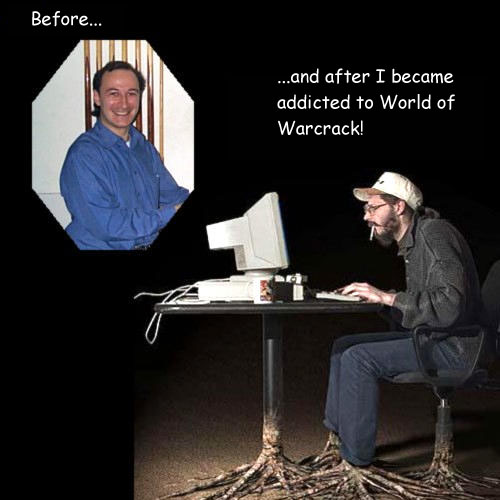
Well, I'm afraid I've been sucked into the World of Warcraft, an MMORPG, affectionately known as Warcrack.

At least finally the age old question can be answered: Is Warcraft suitable training for weekend Swiss tournaments?

I'll let you know.


Not me, but you get the idea.

Saturday, June 25, 2005

How To Lose To a Grandmaster in 22 Moves


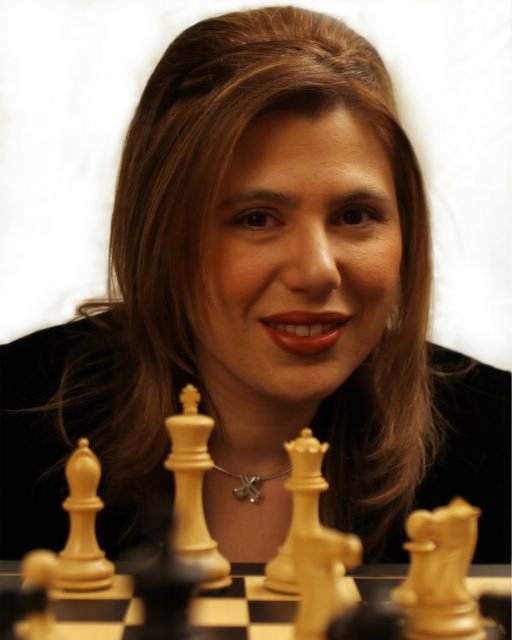
GM Susan Polgar gave a simul last night in Stone Mountain Georgia (just north of Atlanta). This was the first time I've played a GM, much less a world class GM, and it was a lot of fun. I believe she won all the games, and we had some strong players from the House of Pain there to play.

Check out Susan's blog from June 21-25, 2005 for posts with photos of her visit to Atlanta.

You can see how she demolished me here.

Friday, June 17, 2005

Atlanta Chess Center

The Atlanta Chess Center is the place in Georgia to play in USCF tournaments. Known as The House of Pain by its regulars, they have finally gotten something resembling a real web site up and running. Yay!

http://www.atlantachessclub.com/

Thursday, June 16, 2005

This is the End

I've been watching IM Timothy Taylor's 5-part series on How to Defeat the Weaker Player, and the final article has arrived. And this one covers endgame play. This may be my favorite article of the bunch, for many times it will work against the stronger player.

Taylor spells out the need to study endgames very convincingly:

Let’s say you get no attack (HOW TO DEFEAT THE WEAKER PLAYER 2); let’s say you get no special opening advantage (HOW TO DEFEAT THE WEAKER PLAYER 3); let’s say your experience gets you nowhere in the middlegame (HOW TO DEFEAT THE WEAKER PLAYER 4); then all is not lost, for the ending is the most difficult part of the game, and it’s the hardest part of chess to play well without experience.

I can't tell you how many times I've played games like that. No opening advantage (or it fizzled out). No killer tactics. No big middlegame advantage. Pieces trade down. No major activity by anybody. Draw? Sure.

I remember one blitz tournament game (out of the two blitz tournaments I've ever played in), where I had a K+P vs K. I saw right away it was a dead draw. But my excitable opponent didn't understand the opposition and I soon promoted the pawn. Most endgames aren't that simple. Many times you need to visualize a winning endgame after a forced sequence of trades. Here's an example from a fairly recent tournament of mine:


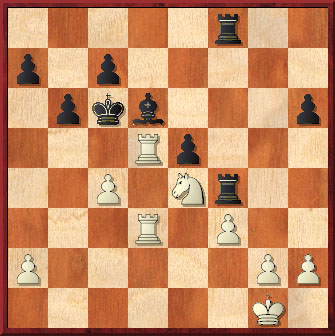
Cope (1985) vs Kilgore (1741)

White has just played 30.Red3?? Black can now force play into a winning endgame. Can you find it? The solution is here.

I still feel that I have a lot to work on for my endgame (don't we all?), and that many of my "boring draws" can turn into wins if I become much better in endgame play.

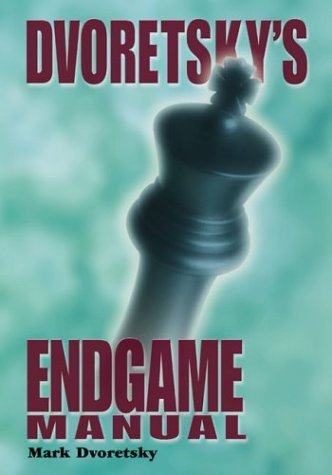
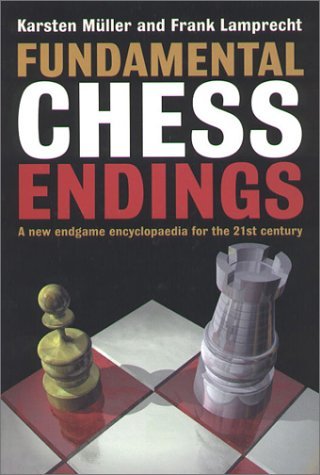
My current favorite endgame books are:


Wednesday, June 15, 2005

Curse of Emory

I played at the Emory Castle Grand Prix tournament for the second year in a row. And once again turned in a poor performance, scoring 2 out of 5 points. 2 out of 5 might not sound so bad, until you realize that I was playing in the U2000 section, and all of my opponents were B players playing up!

Round 1 - Paul Davis (1756), draw. A Sicilian Moscow where I felt I had a slight edge through most of the game, but was unable to convert it to a win. Paul is one tough defender.

Round 2 - Bryan Tillis (1647), I lost. A Glek Four Knights where I turned down a draw offer, found a neat tactic that should lead to a win if I had found the followup tactic. But I didn't, and after playing my last 10+ moves with 1 second on my clock, I finally resigned in a lost endgame. Great job by Bryan who never gave up.

Round 3 - Madhu Nair (1623), I won. A Spanish Berlin (without the queen trade) where I missed a simple tactic that almost got me into real trouble, but I found the sharpest continuation that presented all sorts of problems to solve for my opponent. He missed the best continuation and I soon traded down to a winning endgame.

Round 4 - Joshua Mu (1648), I lost. An Exchange Alekhine. Little kids who can't sit still in their chairs with a 1648 rating are not supposed to understand the subtleties of positional pawn sacrifices! Yet Joshua did, and I fell for it, munching a pawn and then struggling to survive the rest of the game. Joshua piled on the pressure and converted to a nice win. Very impressive.

Round 5 - Myles MacDonald (1648), draw. A double-fianchetto Reti where I forgot to consider such matters as pawn structure, and walked into an IQP position. Still, it had been played before by strong players, so I went with it, aiming for dynamic piece play, controlling the square in front of the IQP, and always looking for an opportune moment to push the pawn. But it quickly turned into a hanging pawn position when I got away with a major bluff: Myles made a move to prevent my pawn push, and I pushed it anyway. There were tactics if he munched the pawn incorrectly, but one line we both missed allowed him to safely keep the pawn with no compensation for me.

Lessons Learned
  1. The amount of time I've studied chess in the last two months? Zero. And it's showing. I also haven't played any, except for a weekend tournament a month ago. My non-chess interests have exploded recently (playing guitar, which I used to do professionally, digital home recording, and World of Warcraft). I'm in the process of putting together a realistic study-plan to try and keep my chess muscles exercised.
  2. A week of chess camp inspires players to perform well in the tournament. Maybe I should take part in the chess camp. It's mainly kids, but some adults do participate. Taking a week off from work to receive training by GMs and IMs sound like a blast.
  3. It doesn't matter if all my opponents were B-class players. Sure, my rating will take a dive, possibly back into B, but I should be able to beat players below 1650 if I deserve to be in A. I'll come back again next year, until I finally break the Curse of Emory!
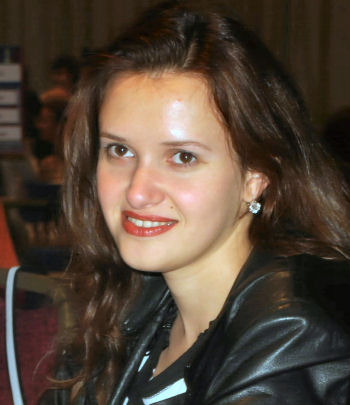


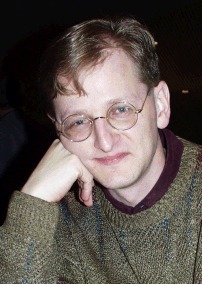
WGM Anna Zatonskih (co-winner)

I could say my poor performance was due to being distracted by WGM Anna Zatonskih, sitting in my direct line of sight several times, but the truth is, I sucked at chess. The open section was won by WGM Zatonskih and GM Becerra.
Wednesday, June 08, 2005

2005 Emory Castle Grand Prix


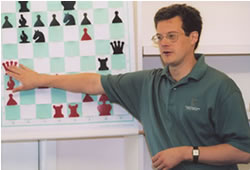
IM Jonathan Schroer, last year's winner

This coming weekend is the Fifth Annual Emory Castle Grand Prix. It culminates a week-long chess camp, where students (mostly kids, but adults can participate, too) receive intense chess-training for a week. Imagine receiving chess lessons from a variety of GMs and IMs all week long, and then playing in a Swiss weekend tournament afterward.


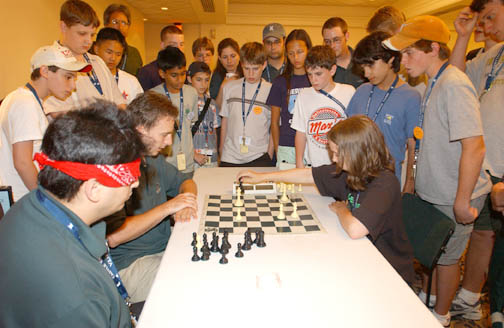
GM Julio Becerra, playing blitz...blindfolded

This is my second time playing in this tournament (I haven't signed up for the chess camp yet). Last year was tough. All my opponents were young kids whose ratings were deflated (there's a whole controversy about scholastic players having deflated ratings compared to the rest of us -- I try to stay out of it) and their brains were on fire from all the chess instruction they'd just received. I scored a dismal 1.5 out of 5 and lost a bunch of rating points. And from some other adult players I've talked to, their experience was very similar to mine. So I figure it's time to get back on the proverbial horse and jump right back in. Worst case is getting to watch a bunch of well-known chess players battling it out.


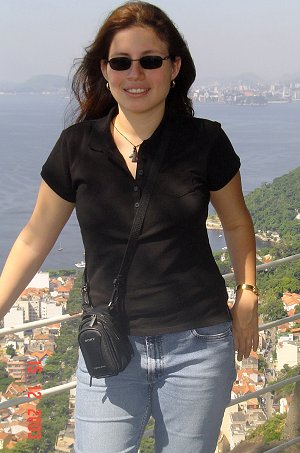
WGM Martha Fierro

The camp instructors include: GM Yuri Shulman, GM Julio Becerra, GM Gregory Serper, GM Boris Kreiman, GM John Fedorowicz, WGM Martha Fierro, WGM Anna Zatonskih, IM Carlos Perdomo, IM Jon Schroer, FM Alex Dunne, FM Andrew Whatley, NM Richard Francisco, Gary Southerland and Jim Mundy.

Friday, May 27, 2005

2005 Georgia State Championship

The Georgia State Championship was held this year at Emory University from April 29 to May 1. We had a decent turnout, fairly close to last year's numbers.


FM Miles Ardaman

FM Miles Ardaman won the championship section.

Lester Bedell won the U2000 section.

Hartley Chang won the U1600 section.

The GCA elections were held between the 4th and 5th rounds for the "member-at-large" position. Surprisingly, only one of the candidates, Steve Schneider, showed up to give a speech. Guess who won.


Steve Schneider

I played in the U2000 section and didn't have so great of a tournament.

My first game was quick and easy. It lasted 30 minutes, of which I spent 2 minutes on my 13th and final move (all my previous moves were known theory).

My second game was a Moller Attack where again my opponent wasn't up on the main line theory, and I was soon up a free pawn.

My third game was a bizarre Center-Game against the U2000 champ Lester Bedell, and I thought I handled the opening and early middlegame quite well. Then I made a few innacuracies and White equalized. Finally, amidst extreme fatigue I made a stupid one-move blunder and threw away the game.

In my fourth game I faced the French Rubinstein, and even though I managed to stay awake throughout this exciting opening, it resulted in a draw as Black had most likely planned.

My fifth game was another howler. I played well and then got tired and missed multiple opportunities to easily win, finally blundering the endgame and I lost.

I attribute the fatigue on my 3rd and 5th games to not having fully recovered from my flu a month ago, but there are still some valuable lessons in all of my games, so it was worth it.

The crosstables are here.

Three of my games are amongst those here.