Taylor spells out the need to study endgames very convincingly:
Let’s say you get no attack (HOW TO DEFEAT THE WEAKER PLAYER 2); let’s say you get no special opening advantage (HOW TO DEFEAT THE WEAKER PLAYER 3); let’s say your experience gets you nowhere in the middlegame (HOW TO DEFEAT THE WEAKER PLAYER 4); then all is not lost, for the ending is the most difficult part of the game, and it’s the hardest part of chess to play well without experience.
I can't tell you how many times I've played games like that. No opening advantage (or it fizzled out). No killer tactics. No big middlegame advantage. Pieces trade down. No major activity by anybody. Draw? Sure.
I remember one blitz tournament game (out of the two blitz tournaments I've ever played in), where I had a K+P vs K. I saw right away it was a dead draw. But my excitable opponent didn't understand the opposition and I soon promoted the pawn. Most endgames aren't that simple. Many times you need to visualize a winning endgame after a forced sequence of trades. Here's an example from a fairly recent tournament of mine:
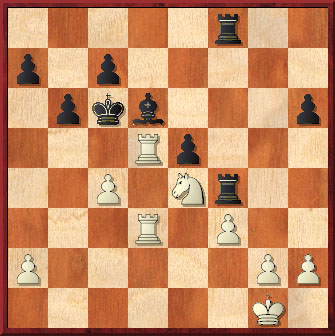
Cope (1985) vs Kilgore (1741)
White has just played 30.Red3?? Black can now force play into a winning endgame. Can you find it? The solution is here.
I still feel that I have a lot to work on for my endgame (don't we all?), and that many of my "boring draws" can turn into wins if I become much better in endgame play.
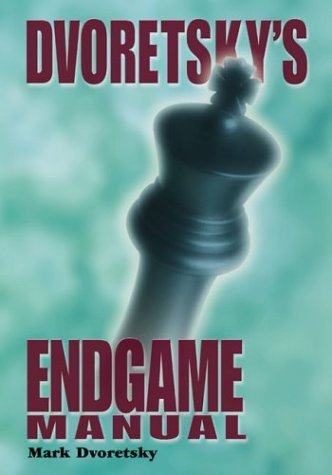
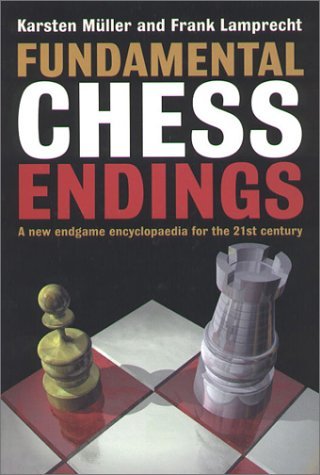
My current favorite endgame books are:


6 comments:
Hey! I found the right move. Now, if I could only do that in my own games....
Yes, if only a sign would flash "Tactic here!" at the appropriate moment things would be a lot easier.
That Fundamental Chess endings is on my next-todo list. I hope it's as good as the book about pawnendings.
Fundamental Chess Endings is very encyclopedic in nature, so for me it's good as a reference. If I was just trying to grasp the fundamental principles I'd look elsewhere for a more tutorial kind of book. The fundamental principles are in Fundamental Chess Endings, but it moves pretty fast so it can cover almost everything under the sun.
I hope 30...Rxe4 is the right move :+)
For strictly technical positions, FCE is a *great* book. I like how they give you little rules and such (similar to their pawn endings book) that help you immediately understand whether a position is won, lost, or drawn. Highly recommended.
I really enjoy the endgame, so I can't wait to start studying it. But currently I'm trying to just play more and play through master games.
Post a Comment